Most roofs do not fail all at once. They give you warning signs for months, sometimes years, before a small problem turns into water running down a bedroom wall. The trouble is that those early signs are easy to miss from the ground, and Utah weather has a way of speeding up the damage once it starts.
Between hard freeze-thaw cycles, heavy spring snowmelt, summer hail, and canyon winds that funnel down the Wasatch Front, Salt Lake City roofs take more abuse than roofs in most parts of the country. Knowing what to look for is the difference between a same-day repair and a full tear-off a few seasons later.
Here is how to tell if your roof needs repair, what you can check yourself, and when it is time to bring in a licensed roofer.
Key Takeaways
- Water stains on ceilings or walls, curling or missing shingles, and shingle granules collecting in your gutters are the three most common signs your roof needs repair.
- Utah’s freeze-thaw cycle and ice dams cause more leaks along the Wasatch Front than any single storm event does.
- Most roof problems can be repaired if they are caught early. Widespread damage across an aging roof is usually a replacement conversation.
- Interior warning signs like daylight in the attic, a musty smell, or a sudden jump in your heating bill often show up before anything is visible outside.
- Roof repairs in Salt Lake City typically run between $300 and $1,500 depending on the type and extent of damage.
- Brady Roofing offers same-day emergency inspections in most cases and provides a written estimate before any work begins.
Why Salt Lake City Roofs Wear Out Faster Than You Would Expect
A roofing system that would last 25 years in a mild climate often needs attention sooner here. A few reasons why:
- Freeze-thaw cycling. Water works its way into small gaps, freezes overnight, expands, and pries those gaps wider. Repeat that a few dozen times each winter and minor flashing separation becomes an active leak.
- Ice dams. Warm air escaping into the attic melts snow at the ridge. That meltwater refreezes at the colder eaves and forms a dam that forces water back up under the shingles. Ice dams are one of the most common causes of interior water damage in older Salt Lake City homes, and they are almost always a ventilation and insulation problem as much as a roofing one.
- Intense sun and dry air. At 4,300 feet, UV exposure is stronger than most homeowners realize. It dries out asphalt shingles, makes them brittle, and accelerates granule loss.
- Wind and hail. Canyon winds lift shingle tabs and break the seal strips that hold them down. Hail bruises the mat underneath even when the surface still looks intact.
Signs Your Roof Needs Repair: What to Look For Outside
You do not need to climb onto the roof. Most of this can be seen from the ground with a pair of binoculars or from an upstairs window.
1. Missing, Cracked, or Curling Shingles
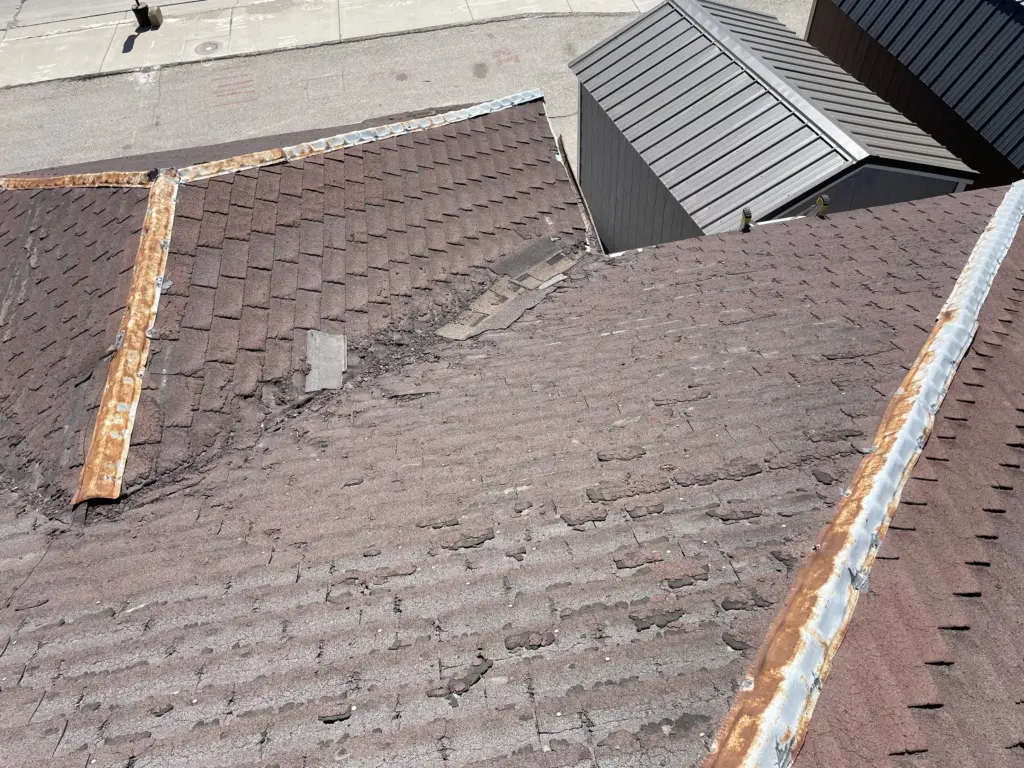
Shingles that curl at the edges or cup in the middle have lost their flexibility and are no longer sealing properly. Missing tabs after a windstorm leave the underlayment exposed, and underlayment is not designed to be your primary water barrier for long.
2. Granules in the Gutters
Those small dark particles that look like coarse sand are the protective granules off your shingles. A handful after a new roof installation is normal. Ongoing accumulation means the shingles are wearing through and losing their UV protection.
3. Damaged or Lifted Flashing
Flashing is the metal that seals the transitions where your roof meets a chimney, a wall, a skylight, or a plumbing vent. Those transitions are where the vast majority of leaks start. If the flashing looks rusted, separated, or bent away from the surface, water has a path in.
4. Sagging or Uneven Rooflines
A dip or wave in the roof plane usually means the decking underneath has absorbed moisture and softened, or that a structural member is compromised. This one is not a wait-and-see item. Call a roofer.
5. Debris and Damage After a Storm
After a hail or wind event, look for dented gutters, dinged fascia, granule piles at the downspout outlets, and shingles that look bruised or pockmarked. Storm damage is often covered by homeowners insurance, but only when it is documented properly. Our storm damage repair team photographs and documents everything and can be present during your adjuster inspection.
6. Standing Water on a Flat or Low-Slope Roof
If you have a flat section over a garage, addition, or porch, ponding water that stays put more than 48 hours after a storm is a problem. It adds weight, breaks down the membrane, and eventually finds a seam.
Signs You Can Check From Inside Your Home
Some of the earliest warnings show up indoors before anything is obvious from the street.
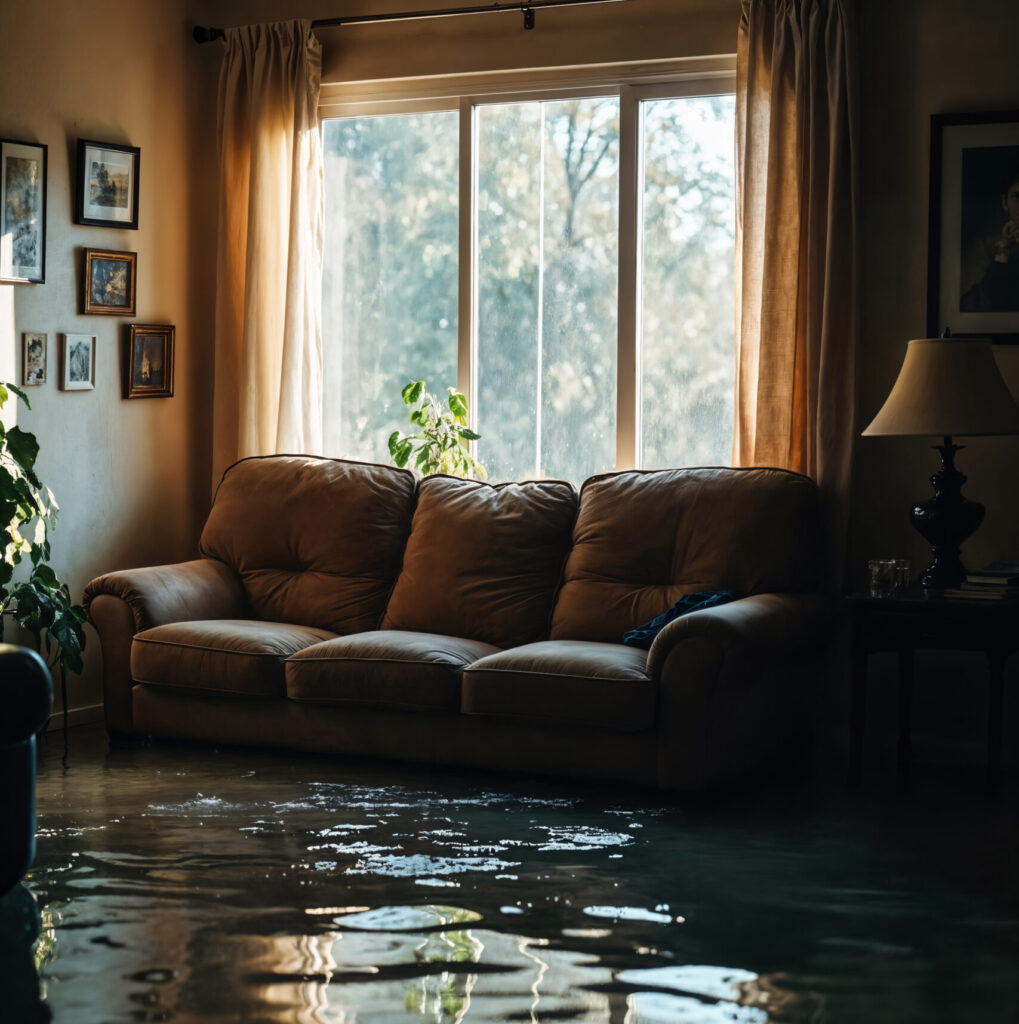
- Water stains on ceilings or walls. Brown or yellow rings, especially near an exterior wall or below a chimney chase, mean water is already getting through. The stain is rarely directly below the entry point, since water travels along rafters before it drops.
- Daylight through the attic. Go into the attic on a bright day with the lights off. Any pinholes of light coming through the roof deck are openings that water can follow.
- Damp insulation or a musty smell. Moisture that never fully dries leads to mold and rot in the decking. If your attic smells damp, something is getting in.
- Peeling paint or bubbling drywall. Trapped moisture behind the surface often shows up as a texture change before it ever becomes a visible stain.
- A sudden spike in heating or cooling costs. Poor attic ventilation drives energy bills up and is frequently the same underlying issue that causes ice dams.
If you are seeing any of these, schedule a roof repair inspection rather than waiting for the next storm to force the issue.
Repair or Replace? How to Tell the Difference
This is the question most homeowners actually want answered, and the honest response depends on three things: the age of the roof, whether the damage is isolated or widespread, and the condition of the decking underneath.
Repair usually makes sense when the roof still has meaningful life left, the damage is confined to one area or one type of component, and the deck is dry and solid. A single leaking valley on a 12-year-old shingle roof is a repair. Failed flashing around a chimney is a repair. Wind-blown tabs across one slope are a repair.
Replacement becomes the smarter investment when the roof is near the end of its expected life, damage appears on multiple slopes, the decking has soft or rotted areas, or you have already paid for repeated repairs in the same season. At that point, patching starts to feel like putting money into a system that is going to need replacing anyway.
There is no formula that answers this from the driveway, which is why a real inspection matters. A good roofer will tell you when a repair is the right call, and will not push a replacement you do not need. If a full roof replacement does turn out to be the better long-term move, you should be shown exactly why.
What to Do When You Spot a Problem
- Document what you see. Take photos of stains, missing shingles, and gutter debris, and note the date. This matters if an insurance claim is involved.
- Contain interior water. Put down a bucket and move anything valuable. Do not try to patch from the inside.
- Stay off the roof. Wet or damaged roofs are genuinely dangerous, and walking on compromised shingles usually makes the damage worse.
- Schedule an inspection. Brady Roofing offers same-day emergency inspections in most cases, along with a written estimate before any work begins.
- Think about what comes next. Once the immediate issue is resolved, a roof maintenance program with scheduled inspections is the least expensive way to keep small problems small.
Final Thoughts
Roofs rarely go from fine to failed overnight. They send signals, and in Salt Lake City those signals tend to show up faster because of what our weather puts them through. Curling shingles, granules in the gutter, lifted flashing, or a stain on the ceiling are all worth acting on early, when the fix is still measured in hours and hundreds of dollars instead of days and thousands.
Brady Roofing has been repairing roofs across Salt Lake City and the Wasatch Front since 1996 with a licensed, W2 crew and no subcontractors. If something on your roof does not look right, schedule a roof repair inspection or request a free estimate and get a straight answer about what your roof actually needs.
Frequently Asked Questions
How do I know if my roof needs repair or if it is just normal aging? Normal aging looks uniform across the whole roof. Repair-level problems are localized and getting worse, such as one section of curling shingles, a stain that grows after every storm, or granule loss concentrated below a single slope. If something is changing rather than just looking old, have it inspected.
Will my homeowners insurance cover roof repair in Utah? Most Utah policies cover damage from a sudden event such as hail, wind, or falling debris. Gradual wear and tear is typically excluded. Contact a roofer to document the damage before you file, so the claim reflects the full scope of what happened.
How often should I have my roof inspected? Once a year is a reasonable baseline for most Salt Lake City homes, plus an additional check after any significant hail or wind event. Older roofs and homes with a history of ice dams benefit from twice-yearly inspections, ideally in fall before the snow and in spring after the melt.
Can I inspect the roof myself? You can do a lot from the ground and from your attic, and that is genuinely useful. What you cannot see from there is the condition of the decking, the seal on the flashing, or hail bruising that has not surfaced yet. Leave the climbing to someone with the training and the fall protection.