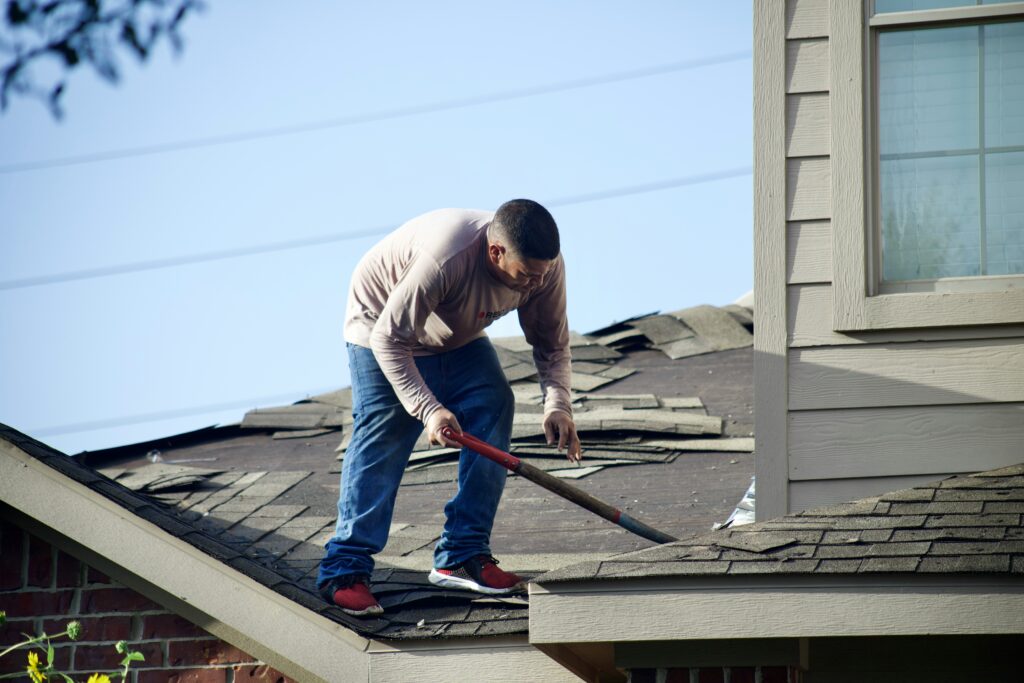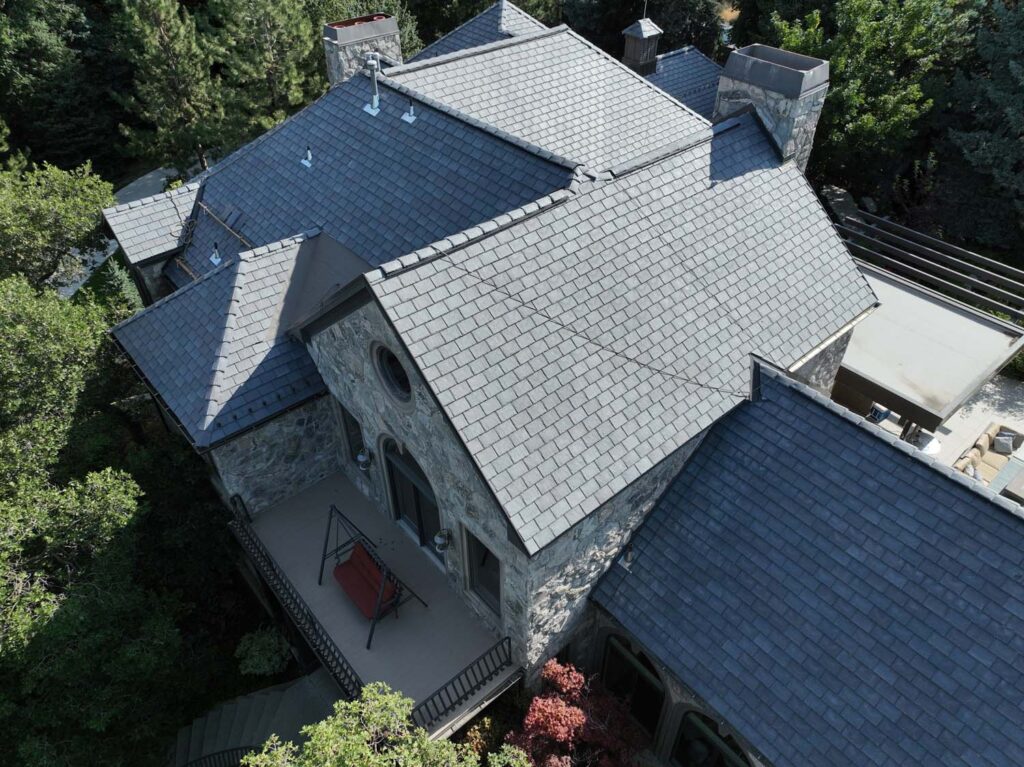
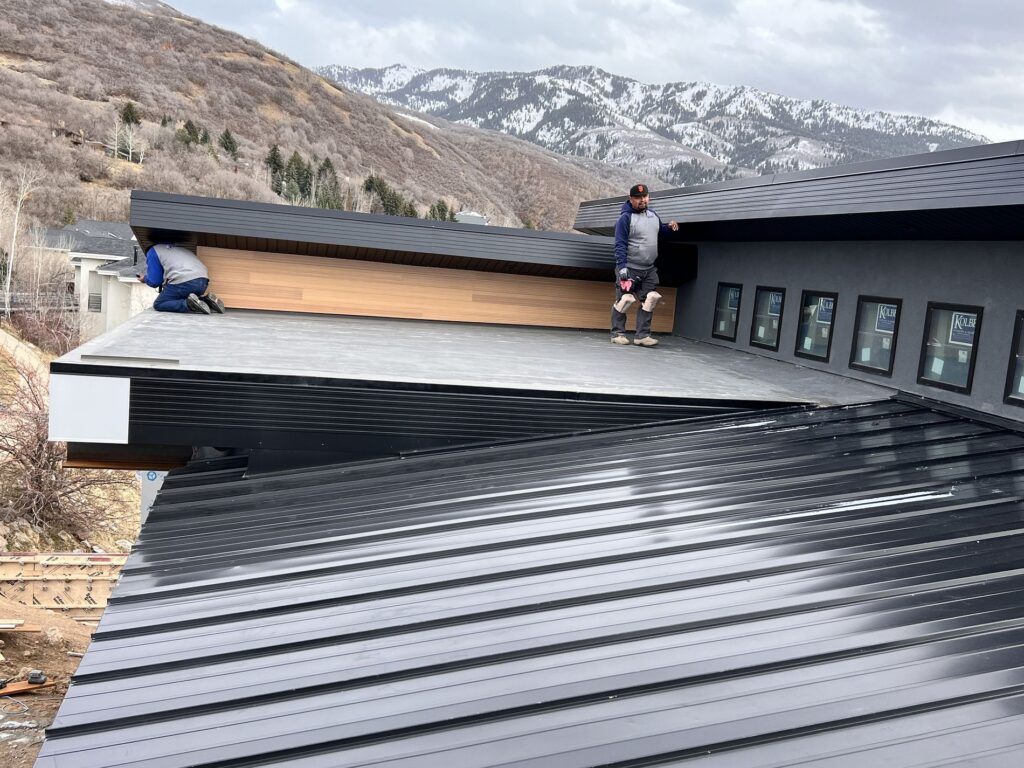
Park City sits roughly 2,500 feet above the Salt Lake Valley floor, and that elevation changes almost everything about how a roof has to perform. A roofing system that holds up perfectly well in Sugar House or Murray can start failing within a few winters in Old Town, Deer Valley, or the Snyderville Basin. Same materials, same installation crew, very different outcome.
That gap is not about workmanship alone. It comes down to snow load, freeze-thaw cycling, ice damming, and wind exposure, all of which behave differently at 7,000 feet than they do at 4,300. If you own a home or building up here, the most useful thing to understand is what actually makes mountain roofing different, and what to ask a Park City roofing company before you hire one.
Key Takeaways
- Park City design snow loads are several times higher than most of the Salt Lake Valley, which changes structural requirements, material choices, and installation details.
- Ice dams are the most common and most expensive roofing failure in mountain homes, and they are usually a ventilation and insulation problem rather than a shingle problem.
- Utah code adds specific eave requirements once ground snow load passes a certain threshold, and Park City properties fall on the heavy side of that line.
- Metal roofing is popular in Park City for good reasons, but it only performs well when snow retention, valleys, and eave details are planned for the specific site.
- Elevation, aspect, and tree cover vary significantly across Park City, so the right roofing system on one street may be the wrong one a mile away.
- A Park City, UT roofing company with real mountain experience will inspect for these conditions specifically instead of applying a valley playbook.
Park City Is a Different Roofing Climate, Not Just a Colder One
It is easy to assume mountain roofing is valley roofing with more snow on top. The difference is more structural than that.
Utah’s building code assigns snow loads by elevation rather than by county line, and the spread is dramatic. Many Wasatch Front valley communities design to a roof snow load in the 30 psf range. Park City area properties sit far above that, and the state code table lists Summit Park at 7,200 feet with a 90 psf roof snow load and a 128 psf ground snow load. Because ground snow load is calculated from site elevation, two Park City homes a few hundred feet apart in elevation can carry meaningfully different design requirements.
That has practical consequences. Decking, fastening patterns, underlayment selection, and how much a roof structure can tolerate before it starts to deflect all depend on getting that number right for your specific address. A roofer who works primarily in the valley may never have had to think about it.
Ice Dams Are the Expensive Problem
If Park City roofs have a signature failure, this is it.
An ice dam forms when heat escaping from the living space warms the roof deck, melts the underside of the snowpack, and sends water down the slope until it reaches the cold overhang past the exterior wall. There it refreezes. The ridge of ice that builds up blocks the next round of meltwater, which backs up under the shingles and finds its way into the sheathing, the insulation, and eventually the ceiling below.
The important thing to understand is that this is rarely a roofing material problem. It is a heat and airflow problem. Recessed can lights, bath fans venting into the attic, gaps around the chimney chase, compressed insulation at the eaves, and blocked soffit vents are all common culprits. Replacing the shingles without addressing any of that will produce the same ice dam next winter.
Effective roof ice dam prevention in a mountain home usually involves some combination of the following:
- Sealing air leaks between the conditioned space and the attic
- Bringing insulation depth up to standard and keeping it out of the soffit airflow path
- Confirming intake and exhaust ventilation are actually balanced, not just present
- Installing a high-temperature ice and water membrane well past the interior wall line, further up the slope than valley installations typically require
- Adding heat cable only where geometry makes the problem unavoidable, such as a north-facing valley over an entry
Utah’s adopted code recognizes how serious this gets at elevation. Once ground snow load exceeds 75 psf, eaves have to be designed to carry an additional uniformly distributed load specifically because of ice buildup. Park City properties are generally well past that threshold. A roofing contractor working in Park City should already be treating eave detailing as a structural question, not a finish detail.
Snow Retention and Where the Snow Goes
On a valley home, snow melts off gradually, and nobody thinks about it. On a Park City home, a full winter’s snowpack releasing off a steep metal slope all at once is a genuine hazard. It can tear off gutters, crush landscaping, damage a deck rail, block an entry door, and injure someone standing underneath.
This is why snow retention design matters so much here. Where the snow sheds, and whether it should be allowed to shed at all, needs to be decided before materials are ordered. Entries, walkways, driveways, mechanical equipment, and lower roof sections all have to be accounted for. Roof-to-wall transitions and valleys that dump onto a lower roof are frequent trouble spots, and they need reinforced detailing rather than a standard flashing approach.
Getting this wrong is one of the more common issues we see on mountain homes that were roofed by crews without local experience. The roof itself may be installed cleanly, but nobody asked where 200 inches of accumulated snow was going to land.
Why Metal Roofing Comes Up So Often in Park City
There is a reason metal roofing in Park City shows up on so many custom and luxury homes, particularly in Deer Valley, Promontory, and higher-elevation neighborhoods. Standing seam systems shed snow efficiently, handle freeze-thaw cycling without the granule loss that ages asphalt, resist high winds, and last considerably longer than a typical shingle roof.
Metal is not automatically the right answer, though. It performs well when the slope, snow retention plan, valley detailing, and panel profile are matched to the site. On a low-slope section, or on a roof where sliding snow has nowhere safe to go, metal can create problems it was meant to solve. High-quality architectural shingles and synthetic systems remain a strong fit for plenty of Park City homes depending on style, slope, and exposure.
The right recommendation depends on the specific roof. Any contractor who leads with a single material before looking at your property is selling, not advising.
Elevation and Aspect Change the Answer Within Park City
Park City is not one microclimate. A south-facing roof in Old Town goes through far more daily freeze-thaw cycling than a shaded north-facing roof at a similar elevation, because it melts in afternoon sun and refreezes overnight. Heavy tree cover keeps snow on a roof longer. Exposed ridgelines in the Snyderville Basin take wind loads that sheltered lots never see.
These are the variables that separate a mountain roofer from a general one. Two homes with identical square footage and identical materials can need different underlayment strategies, different ventilation approaches, and different maintenance schedules based on nothing more than which way they face.
What to Look for in a Park City Roofing Contractor
If you are evaluating a Park City roofing company, these questions tend to be revealing:
- Can they tell you your site’s design snow load? Not a general answer about mountain roofs. Your address, your elevation.
- Do they inspect the attic, not just the roof surface? Ice dam causes live below the deck. An inspection that stops at the shingles is incomplete.
- How do they plan snow shedding? They should be walking your property and pointing at entries and equipment, not just measuring squares.
- Is the crew employed or subcontracted? Consistency of installation detail matters more at elevation, where small mistakes have bigger consequences.
- Are they licensed and insured in Utah, with workers’ compensation? Non-negotiable on any steep mountain roof.
- How do they handle winter scheduling? Park City has a shorter reliable installation window than the valley, and an honest contractor will tell you when a project should wait.
Timing a Roofing Project in the Mountains
The workable installation season is genuinely shorter up here. Adhesive-dependent materials need consistent temperatures to seal properly, and a roof installed in marginal conditions can pass a visual inspection while underperforming for years.
Practically speaking, late spring through early fall is the strongest window for a full replacement in Park City. Many repairs can still be handled safely in winter when conditions allow, and active leaks should never wait for better weather. The point is that scheduling should be driven by what the roof needs and what the weather allows, not by whoever can get on your calendar fastest.
If a replacement can reasonably wait until conditions improve, a good contractor will say so and stabilize the roof in the meantime.
Final Thoughts
The roofs that last in Park City are the ones designed for Park City. That means snow load calculated for the actual site, eave and valley details built for ice, a snow shedding plan that accounts for where people walk, and ventilation that keeps the deck cold enough to stop ice dams from forming in the first place.
Brady Roofing has been installing and repairing roofs across Utah since 1996, including roofing work in Park City on custom and luxury homes throughout Deer Valley, Old Town, Jeremy Ranch, Promontory, and the Snyderville Basin. Our W2 crews are trained to manufacturer standards, and our inspections cover the full assembly rather than the surface alone. You get a clear written assessment, an honest recommendation about repair versus replacement, and transparent pricing with no pressure.
If you would like a straightforward read on the condition of your mountain roof, schedule a free inspection, and we will walk you through exactly what we find.
Frequently Asked Questions
- How often should a Park City roof be inspected?
At least once a year, and ideally in spring after the snow clears. Winter damage from ice dams, snow load, and wind is frequently not visible from the ground, and catching it early is far cheaper than discovering it through a ceiling stain.
- Are ice dams a sign my roof needs to be replaced?
Usually not. Ice dams are typically caused by heat loss and ventilation issues in the attic rather than by failing roofing material. In most cases, a targeted roof repair resolves it, and a proper inspection should identify the source before anyone recommends a full replacement.
- Is metal roofing worth the cost in Park City?
For many mountain homes, yes. The longer service life, snow shedding performance, and wind resistance often justify the higher upfront cost over the life of the roof. It depends on your slope, roof geometry, and where sliding snow would land.
- What is the biggest mistake Park City homeowners make with their roofs?
Treating the roof as a surface rather than a system. The shingles or panels are one layer of an assembly that includes ventilation, insulation, air sealing, underlayment, and structural capacity. Mountain conditions expose weakness in any one of those.